


Coding interviews are often the most intimidating part of the tech hiring process. Whether you’re a recent CS graduate or a career changer trying to break into software development, the pressure to perform well in technical interviews can be overwhelming. Unfortunately, many candidates—even those with solid programming skills—make avoidable mistakes that cost them job offers.
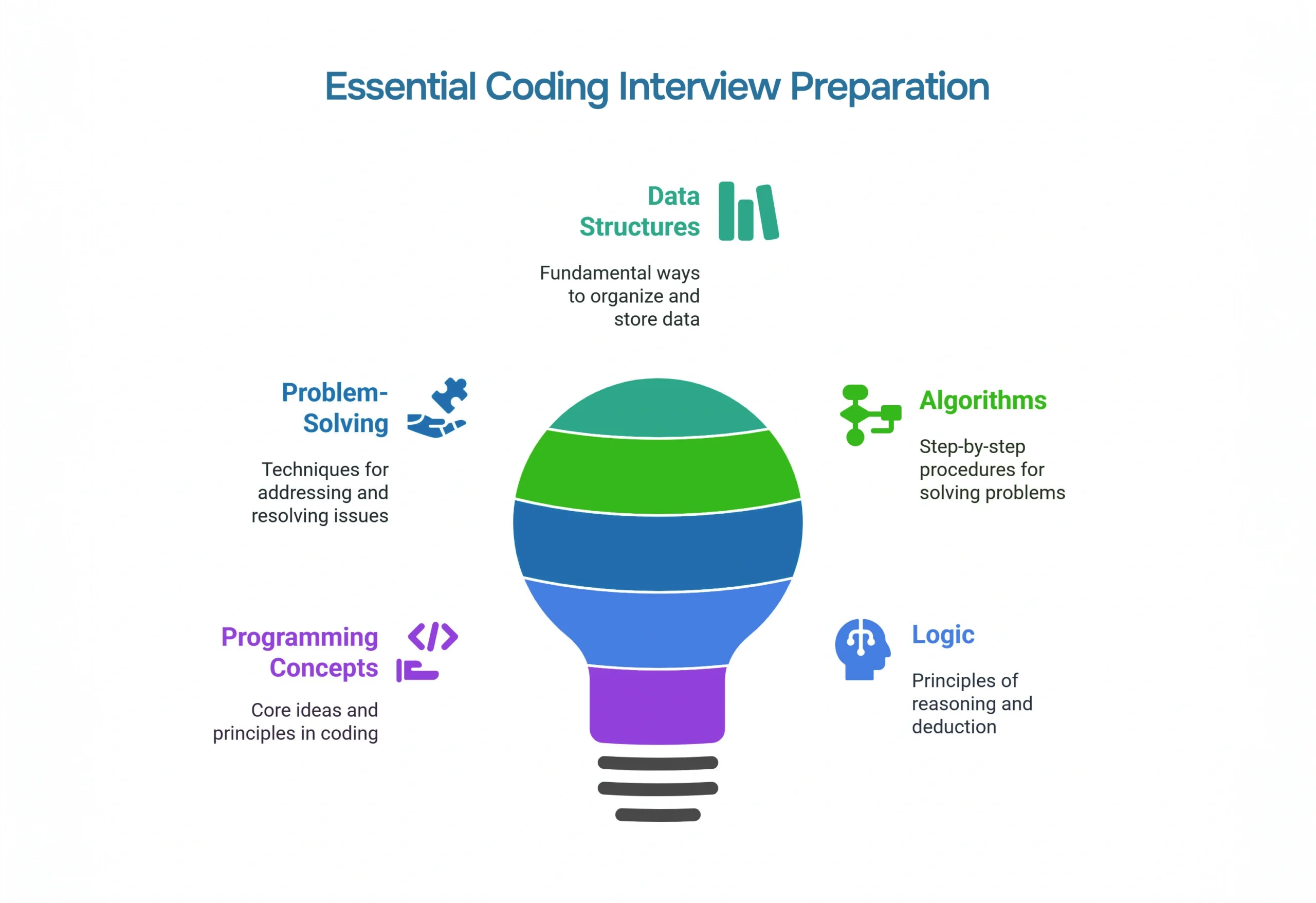
In this blog, we’ll explore five of the most common coding interview mistakes, how to avoid them, and how SynergisticIT’s Job Placement Program helps candidates overcome these challenges to land high-paying tech roles.
Mistake #1: Jumping Into Code Without Clarifying the Problem
Why It Happens
Many candidates feel the need to start coding immediately to show they’re fast and capable. However, research from Interviewing.io (2024) found that 42% of failed technical interviews were due to incomplete problem understanding, not incorrect syntax or logic. = Rushing into a solution without fully understanding the problem often leads to incorrect or inefficient code.
For example, in a coding interview for a software engineering role, a candidate was asked to “find the longest substring without repeating characters.” Without clarifying whether the string could include spaces, punctuation, or Unicode characters, they wrote a solution that handled only lowercase English letters. The interviewer later revealed that the input could contain emojis, instantly breaking the code.
How to Avoid It
- Ask clarifying questions. For instance, if given an array problem, ask: “Can the array contain negative numbers? Are the inputs sorted? What’s the range of possible values?” This helps uncover hidden complexity.
- Restate the problem. Reframe the question in your own words. Example: “So, we need the function to return the shortest path in a weighted graph, even if negative edges are present, correct?” This shows the interviewer you’re thinking critically and ensures you’re on the same page.
- Plan before coding. Jot down the algorithm, expected data structures, and time complexity on a whiteboard. A 2023 HackerRank survey found that candidates who spent even 2–3 minutes planning before writing code increased their pass rate by 27%.
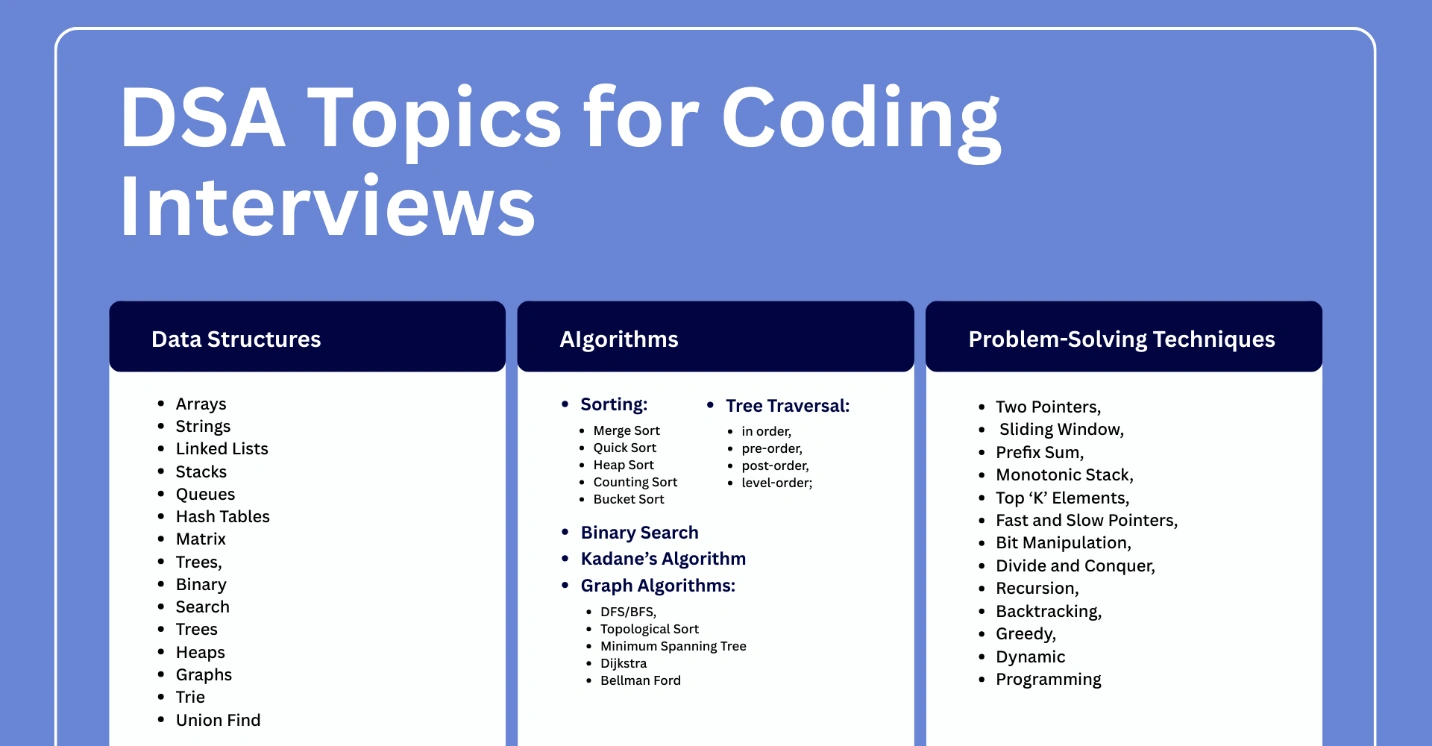
How SynergisticIT Helps
- Break down problems into digestible parts
- Communicate their thought process clearly
- Avoid premature coding by focusing on problem comprehension first
Mistake #2: Ignoring Time and Space Complexity
Why It Happens
Some candidates write working code but fail to consider its efficiency. In interviews, brute-force solutions may work for small inputs but fail on scale. According to LeetCode’s 2023 Hiring Insights, 35% of rejected candidates had working solutions that couldn’t handle the time limits on larger datasets. This often happens because candidates focus solely on correctness, overlooking scalability.
Example:
In a technical interview for an e-commerce company, a candidate was asked to find all pairs of numbers in an array that sum to a given value. They wrote a nested loop solution with O(n²) time complexity. It worked for an array of 10 numbers, but when tested on a dataset of 100,000 numbers, it timed out. A more efficient approach—using a hash set—could have solved the problem in O(n) time, easily handling large inputs.

How to Avoid It
- Analyze your algorithm’s complexity. Before coding, ask yourself, “What’s my current time and space complexity?” Use Big-O notation to explain time and space trade-offs.
- Optimize when possible. After writing a working solution, look for improvements—can a sort or a hash map cut down runtime? Interviewers often ask for improvements after a working solution.
- Practice scalable thinking. Consider how your code performs with large datasets.HackerRank’s 2024 study found that candidates who mentally scaled test cases before coding improved their performance by 22% in follow-up questions.
How SynergisticIT Helps
- Evaluate multiple approaches to a problem
- Choose the most efficient one
- Articulate why their solution is optimal
Mistake #3: Poor Communication During the Interview
Why It Happens
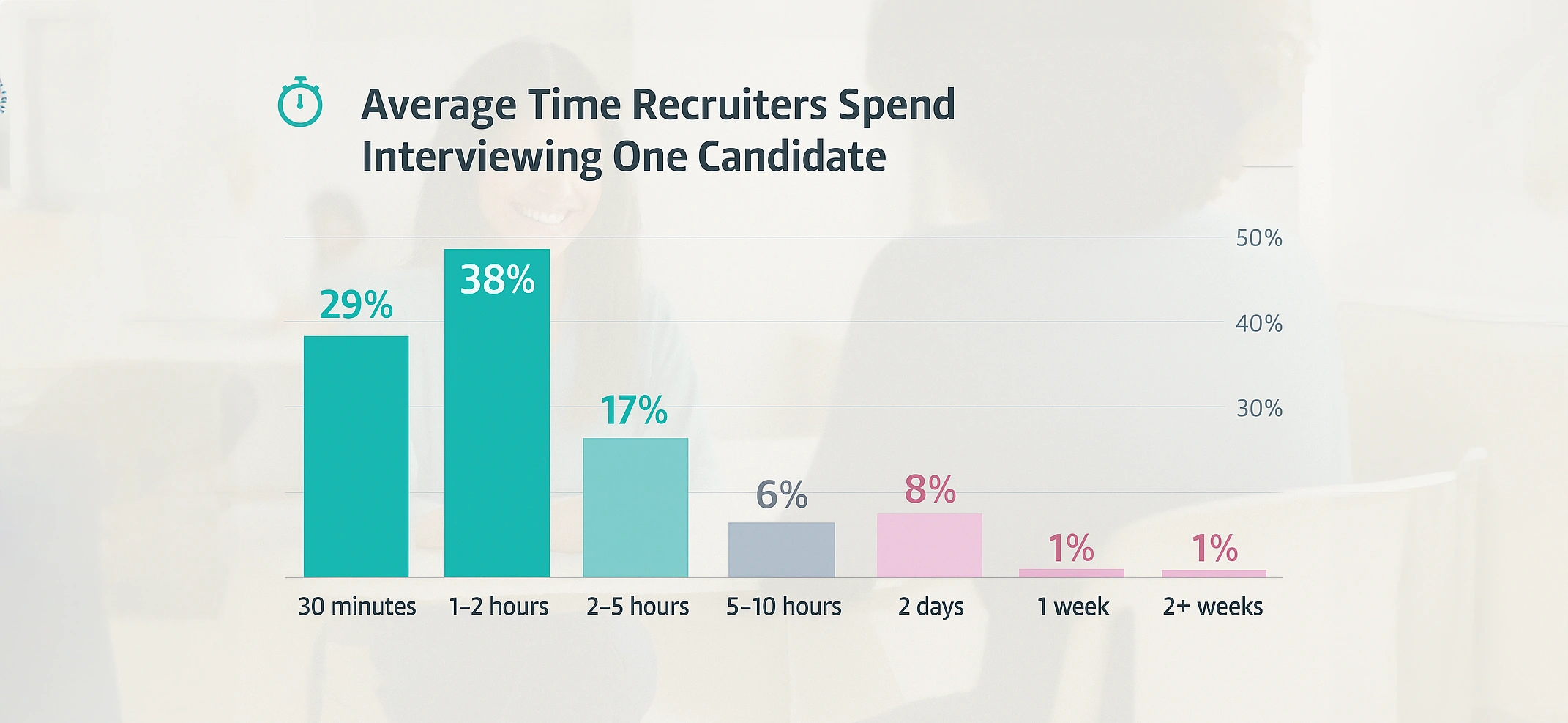
How to Avoid It
- Think out loud. Share your reasoning, even if you’re unsure. Example: “First, I’ll store each URL in a database with a unique ID, then I’ll encode that ID into a short string using base-62.”
- Use structured language. Break your explanation into steps: input, logic, output.
- Engage the interviewer. Ask if they’d like a brute-force solution first or a more optimized one.
How SynergisticIT Helps
- Clear verbal articulation of coding logic
- STAR method for behavioral questions
- Real-time feedback during mock interviews
Mistake #4: Not Practicing Enough Real Coding Problems
Why It Happens
Many candidates fall into the trap of feeling productive by watching coding tutorials or reading other people’s solutions, without actually doing the hard work of solving problems themselves. While passive learning helps with understanding concepts, it rarely prepares you for the pressure and unpredictability of real coding interviews. A 2024 HackerRank Developer Skills Report found that candidates who primarily relied on tutorials without hands-on practice scored 30% lower on timed coding challenges compared to those who practiced actively.
Example:
A candidate preparing for a data structures interview at Amazon had watched dozens of YouTube explanations for graph algorithms. During the interview, they were asked to implement Dijkstra’s algorithm. They remembered the concept but couldn’t recall the syntax or debug efficiently because they had never actually coded it themselves.
How to Avoid It
- Use platforms like LeetCode, HackerRank, and CodeSignal.
- Solve problems daily. Even solving 1–2 problems a day helps build muscle memory and pattern recognition for common algorithms.
- Simulate real interviews. Set a timer and practice under realistic conditions to train for both speed and clarity.
How SynergisticIT Helps
- Daily coding challenges
- Timed mock interviews
- Real-world project assignments
Mistake #5: Failing to Prepare for System Design and Behavioral Questions
Why It Happens
How to Avoid It
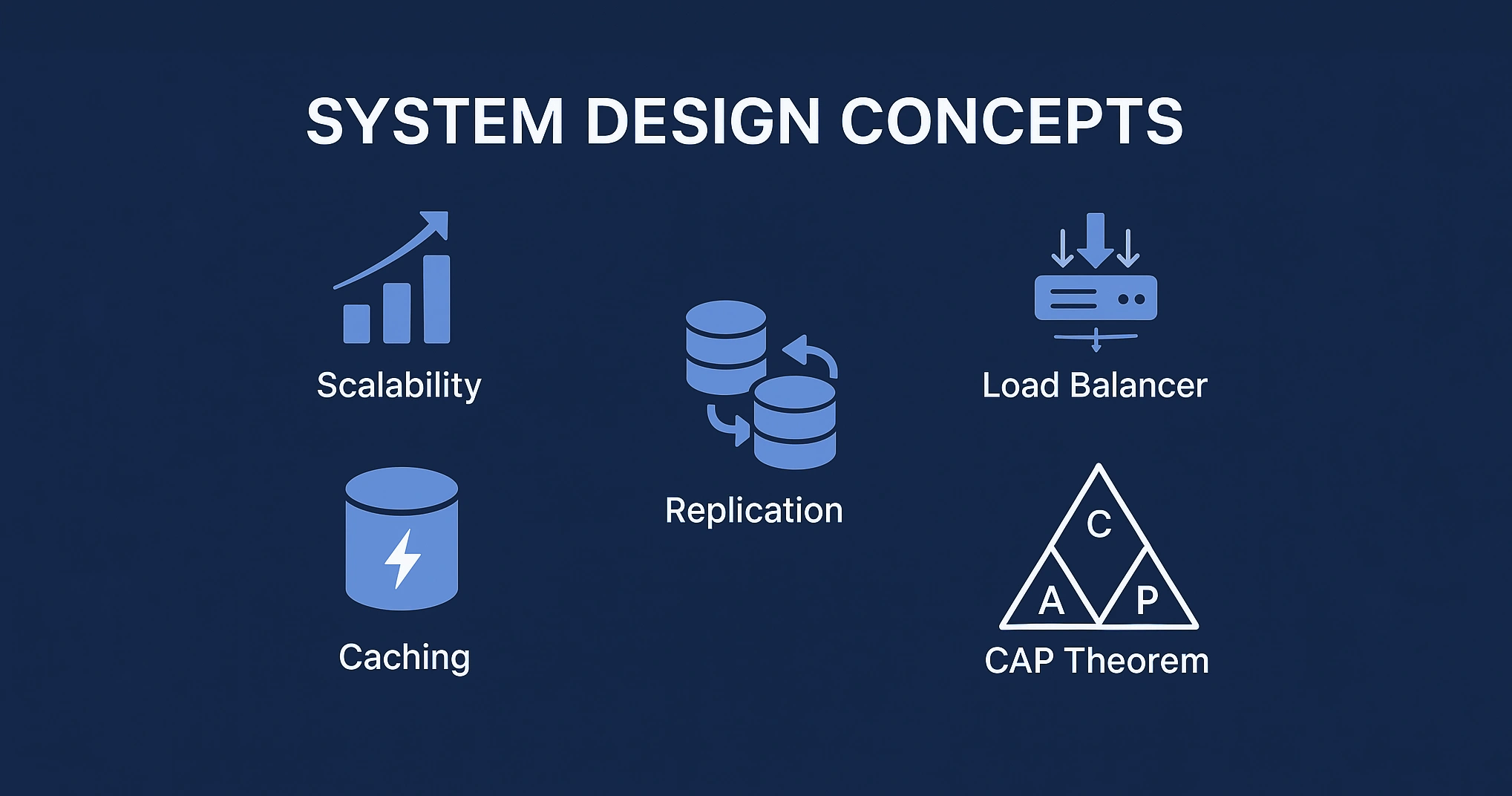
- Study system design fundamentals. Learn about scalability, load balancing, caching, etc.
- Prepare a story bank. Use the STAR method to answer behavioral questions.
- Understand the company’s tech stack. Tailor your answers to their environment.
How SynergisticIT Helps
- System design workshops for scalable architecture thinking
- Behavioral interview coaching to build confidence and storytelling skills
- Resume and LinkedIn optimization to align with employer expectations
How SynergisticIT’s Job Placement Program Sets You Up for Success
- Structured Upskilling in In-Demand Tech Skills
- Java, Python, Spring Boot
- AWS, MERN Stack, SQL
- Data Structures & Algorithms
- Real-World Project Experience
- Coding Assessments and Interview Prep
- Timed coding assessments
- Mock interviews with feedback
- System design and behavioral coaching
- Resume, LinkedIn, and Story Bank Optimization
- Craft a compelling resume
- Build a recruiter-friendly LinkedIn profile
- Prepare STAR-based stories for behavioral interviews
- Employer Marketing and Interview Scheduling
- Proven Track Record of Success

- Amazon
- PayPal
- Cisco
- IBM
Final Thoughts
- A proven roadmap
- Real skills
- Interview mastery
- Employer connections
- And most importantly—results.