
Top 100 Programming / Coding Interview Questions and Answers

Coding Interview Questions and Answers part1

[fusion_builder_container type=”flex” hundred_percent=”no” equal_height_columns=”no” menu_anchor=”” hide_on_mobile=”small-visibility,medium-visibility,large-visibility” class=”” id=”” background_color=”” background_image=”” background_position=”center center” background_repeat=”no-repeat” fade=”no” background_parallax=”none” parallax_speed=”0.3″ video_mp4=”” video_webm=”” video_ogv=”” video_url=”” video_aspect_ratio=”16:9″ video_loop=”yes” video_mute=”yes” overlay_color=”” video_preview_image=”” border_color=”” border_style=”solid” padding_top=”” padding_bottom=”” padding_left=”” padding_right=””][fusion_builder_row][fusion_builder_column type=”1_1″ layout=”1_1″ background_position=”left top” background_color=”” border_color=”” border_style=”solid” border_position=”all” spacing=”yes” background_image=”” background_repeat=”no-repeat” padding_top=”” padding_right=”” padding_bottom=”” padding_left=”” margin_top=”0px” margin_bottom=”0px” class=”” id=”” animation_type=”” animation_speed=”0.3″ animation_direction=”left” hide_on_mobile=”small-visibility,medium-visibility,large-visibility” center_content=”no” last=”true” min_height=”” hover_type=”none” link=”” border_sizes_top=”” border_sizes_bottom=”” border_sizes_left=”” border_sizes_right=”” first=”true”][fusion_text]

[/fusion_text][/fusion_builder_column][/fusion_builder_row][/fusion_builder_container][fusion_builder_container type=”flex” hundred_percent=”no” hundred_percent_height=”no” min_height=”” hundred_percent_height_scroll=”no” align_content=”stretch” flex_align_items=”flex-start” flex_justify_content=”flex-start” flex_column_spacing=”” hundred_percent_height_center_content=”yes” equal_height_columns=”no” container_tag=”div” menu_anchor=”” hide_on_mobile=”small-visibility,medium-visibility,large-visibility” status=”published” publish_date=”” class=”” id=”” margin_top_medium=”” margin_bottom_medium=”” margin_top_small=”” margin_bottom_small=”” margin_top=”0px” margin_bottom=”” padding_top_medium=”” padding_right_medium=”” padding_bottom_medium=”” padding_left_medium=”” padding_top_small=”” padding_right_small=”” padding_bottom_small=”” padding_left_small=”” padding_top=”” padding_right=”” padding_bottom=”” padding_left=”” link_color=”” link_hover_color=”” border_sizes_top=”” border_sizes_right=”” border_sizes_bottom=”” border_sizes_left=”” border_color=”” border_style=”solid” box_shadow=”no” box_shadow_vertical=”” box_shadow_horizontal=”” box_shadow_blur=”0″ box_shadow_spread=”0″ box_shadow_color=”” box_shadow_style=”” z_index=”” overflow=”” gradient_start_color=”” gradient_end_color=”” gradient_start_position=”0″ gradient_end_position=”100″ gradient_type=”linear” radial_direction=”center center” linear_angle=”180″ background_color=”” background_image=”” background_position=”center center” background_repeat=”no-repeat” fade=”no” background_parallax=”none” enable_mobile=”no” parallax_speed=”0.3″ background_blend_mode=”none” video_mp4=”” video_webm=”” video_ogv=”” video_url=”” video_aspect_ratio=”16:9″ video_loop=”yes” video_mute=”yes” video_preview_image=”” render_logics=”” absolute=”off” absolute_devices=”small,medium,large” sticky=”off” sticky_devices=”small-visibility,medium-visibility,large-visibility” sticky_background_color=”” sticky_height=”” sticky_offset=”” sticky_transition_offset=”0″ scroll_offset=”0″ animation_type=”” animation_direction=”left” animation_speed=”0.3″ animation_offset=”” filter_hue=”0″ filter_saturation=”100″ filter_brightness=”100″ filter_contrast=”100″ filter_invert=”0″ filter_sepia=”0″ filter_opacity=”100″ filter_blur=”0″ filter_hue_hover=”0″ filter_saturation_hover=”100″ filter_brightness_hover=”100″ filter_contrast_hover=”100″ filter_invert_hover=”0″ filter_sepia_hover=”0″ filter_opacity_hover=”100″ filter_blur_hover=”0″][fusion_builder_row][fusion_builder_column type=”1_1″ layout=”1_1″ align_self=”auto” content_layout=”column” align_content=”flex-start” valign_content=”flex-start” content_wrap=”wrap” spacing=”” center_content=”no” link=”” target=”_self” min_height=”” hide_on_mobile=”small-visibility,medium-visibility,large-visibility” sticky_display=”normal,sticky” class=”” id=”” type_medium=”” type_small=”” order_medium=”0″ order_small=”0″ dimension_spacing_medium=”” dimension_spacing_small=”” dimension_spacing=”” dimension_margin_medium=”” dimension_margin_small=”” margin_top=”” margin_bottom=”” padding_medium=”” padding_small=”” padding_top=”” padding_right=”” padding_bottom=”” padding_left=”” hover_type=”none” border_sizes=”” border_color=”” border_style=”solid” border_radius=”” box_shadow=”no” dimension_box_shadow=”” box_shadow_blur=”0″ box_shadow_spread=”0″ box_shadow_color=”” box_shadow_style=”” background_type=”single” gradient_start_color=”” gradient_end_color=”” gradient_start_position=”0″ gradient_end_position=”100″ gradient_type=”linear” radial_direction=”center center” linear_angle=”180″ background_color=”” background_image=”” background_image_id=”” background_position=”left top” background_repeat=”no-repeat” background_blend_mode=”none” render_logics=”” filter_type=”regular” filter_hue=”0″ filter_saturation=”100″ filter_brightness=”100″ filter_contrast=”100″ filter_invert=”0″ filter_sepia=”0″ filter_opacity=”100″ filter_blur=”0″ filter_hue_hover=”0″ filter_saturation_hover=”100″ filter_brightness_hover=”100″ filter_contrast_hover=”100″ filter_invert_hover=”0″ filter_sepia_hover=”0″ filter_opacity_hover=”100″ filter_blur_hover=”0″ animation_type=”” animation_direction=”left” animation_speed=”0.3″ animation_offset=”” last=”true” border_position=”all” first=”true”][fusion_text columns=”” column_min_width=”” column_spacing=”” rule_style=”default” rule_size=”” rule_color=”” content_alignment_medium=”” content_alignment_small=”” content_alignment=”” hide_on_mobile=”small-visibility,medium-visibility,large-visibility” sticky_display=”normal,sticky” class=”” id=”” margin_top=”” margin_right=”” margin_bottom=”” margin_left=”” font_size=”” fusion_font_family_text_font=”” fusion_font_variant_text_font=”” line_height=”” letter_spacing=”” text_color=”” animation_type=”” animation_direction=”left” animation_speed=”0.3″ animation_offset=””]

Coding Interview Questions and AnswersWhether you’re a beginner or an experienced developer, preparation is key to cracking coding interviews. This page will help you prepare for the Top 100 coding interview questions. With practice and the right mindset, you can approach each question with confidence.
Here, you’ll find problems on topics like data structures, algorithms, loops, arrays, and more. Practicing these questions will help you build confidence and improve your problem-solving skills.
Whether you’re prepping for a big tech company or a startup, these questions will sharpen your skills and boost your confidence.

[/fusion_text][/fusion_builder_column][/fusion_builder_row][/fusion_builder_container][fusion_builder_container type=”flex” hundred_percent=”no” hundred_percent_height=”no” min_height=”” hundred_percent_height_scroll=”no” align_content=”stretch” flex_align_items=”flex-start” flex_justify_content=”flex-start” flex_column_spacing=”” hundred_percent_height_center_content=”yes” equal_height_columns=”no” container_tag=”div” menu_anchor=”” hide_on_mobile=”small-visibility,medium-visibility,large-visibility” status=”published” publish_date=”” class=”” id=”” margin_top_medium=”” margin_bottom_medium=”” margin_top_small=”” margin_bottom_small=”” margin_top=”” margin_bottom=”” padding_top_medium=”” padding_right_medium=”” padding_bottom_medium=”” padding_left_medium=”” padding_top_small=”” padding_right_small=”” padding_bottom_small=”” padding_left_small=”” padding_top=”” padding_right=”” padding_bottom=”” padding_left=”” link_color=”” link_hover_color=”” border_sizes_top=”10px” border_sizes_right=”10px” border_sizes_bottom=”10px” border_sizes_left=”10px” border_color=”#007dc6″ border_style=”solid” box_shadow=”yes” box_shadow_vertical=”4″ box_shadow_horizontal=”4″ box_shadow_blur=”30″ box_shadow_spread=”0″ box_shadow_color=”rgba(0,0,0,0.32)” box_shadow_style=”” z_index=”” overflow=”” gradient_start_color=”” gradient_end_color=”” gradient_start_position=”0″ gradient_end_position=”100″ gradient_type=”linear” radial_direction=”center center” linear_angle=”180″ background_color=”” background_image=”” background_position=”center center” background_repeat=”no-repeat” fade=”no” background_parallax=”none” enable_mobile=”no” parallax_speed=”0.3″ background_blend_mode=”none” video_mp4=”” video_webm=”” video_ogv=”” video_url=”” video_aspect_ratio=”16:9″ video_loop=”yes” video_mute=”yes” video_preview_image=”” render_logics=”” absolute=”off” absolute_devices=”small,medium,large” sticky=”off” sticky_devices=”small-visibility,medium-visibility,large-visibility” sticky_background_color=”” sticky_height=”” sticky_offset=”” sticky_transition_offset=”0″ scroll_offset=”0″ animation_type=”” animation_direction=”left” animation_speed=”0.3″ animation_offset=”” filter_hue=”0″ filter_saturation=”100″ filter_brightness=”100″ filter_contrast=”100″ filter_invert=”0″ filter_sepia=”0″ filter_opacity=”100″ filter_blur=”0″ filter_hue_hover=”0″ filter_saturation_hover=”100″ filter_brightness_hover=”100″ filter_contrast_hover=”100″ filter_invert_hover=”0″ filter_sepia_hover=”0″ filter_opacity_hover=”100″ filter_blur_hover=”0″][fusion_builder_row][fusion_builder_column type=”1_1″ layout=”1_1″ align_self=”auto” content_layout=”column” align_content=”flex-start” valign_content=”flex-start” content_wrap=”wrap” spacing=”” center_content=”no” link=”” target=”_self” min_height=”” hide_on_mobile=”small-visibility,medium-visibility,large-visibility” sticky_display=”normal,sticky” class=”” id=”” background_image_id=”” type_medium=”” type_small=”” order_medium=”0″ order_small=”0″ spacing_left_medium=”” spacing_right_medium=”” spacing_left_small=”” spacing_right_small=”” spacing_left=”” spacing_right=”” margin_top_medium=”” margin_bottom_medium=”” margin_top_small=”” margin_bottom_small=”” margin_top=”” margin_bottom=”” padding_top_medium=”” padding_right_medium=”” padding_bottom_medium=”” padding_left_medium=”” padding_top_small=”” padding_right_small=”” padding_bottom_small=”” padding_left_small=”” padding_top=”20px” padding_right=”20px” padding_bottom=”20px” padding_left=”20px” hover_type=”none” border_sizes_top=”” border_sizes_right=”” border_sizes_bottom=”” border_sizes_left=”” border_color=”” border_style=”solid” border_radius_top_left=”” border_radius_top_right=”” border_radius_bottom_right=”” border_radius_bottom_left=”” box_shadow=”no” box_shadow_vertical=”” box_shadow_horizontal=”” box_shadow_blur=”0″ box_shadow_spread=”0″ box_shadow_color=”” box_shadow_style=”” background_type=”single” gradient_start_color=”” gradient_end_color=”” gradient_start_position=”0″ gradient_end_position=”100″ gradient_type=”linear” radial_direction=”center center” linear_angle=”180″ background_color=”” background_image=”” background_position=”left top” background_repeat=”no-repeat” background_blend_mode=”none” render_logics=”” filter_type=”regular” filter_hue=”0″ filter_saturation=”100″ filter_brightness=”100″ filter_contrast=”100″ filter_invert=”0″ filter_sepia=”0″ filter_opacity=”100″ filter_blur=”0″ filter_hue_hover=”0″ filter_saturation_hover=”100″ filter_brightness_hover=”100″ filter_contrast_hover=”100″ filter_invert_hover=”0″ filter_sepia_hover=”0″ filter_opacity_hover=”100″ filter_blur_hover=”0″ animation_type=”” animation_direction=”left” animation_speed=”0.3″ animation_offset=”” last=”true” border_position=”all” first=”true”][fusion_accordion type=”accordions” boxed_mode=”” border_size=”1″ border_color=”” background_color=”” hover_color=”” divider_line=”” title_font_size=”” icon_size=”” icon_color=”” icon_boxed_mode=”” icon_box_color=”#4f4f4f” icon_alignment=”right” toggle_hover_accent_color=”#3ed9df” hide_on_mobile=”small-visibility,medium-visibility,large-visibility” class=”interview_list” id=””][fusion_toggle title=”Question 1: What is a Data Structure?” open=”no” class=”” id=””]

Answer:

A data structure is a storage format that defines the way data is stored, organized, and manipulated. Some popular data structures are Arrays, Trees, and Graphs.

[/fusion_toggle][fusion_toggle title=”Question 2: What is an Array?” open=”no” class=”” id=””]

Answer:

  • An array is commonly referred to as a collection of items stored at contiguous memory locations.
  • Items stored are of the same type.
  • It organizes data so that a related set of values can be easily sorted or searched.

What is an Array | Coding Interview Question

[/fusion_toggle][fusion_toggle title=”Question 3: What is a Linked List?” open=”no” class=”” id=””]

Answer:

  • Like an array, a linked list refers to a linear data structure in which the elements are not necessarily stored in a contiguous manner.
  • It is basically a sequence of nodes, each node points towards the next node forming a chain-like structure.
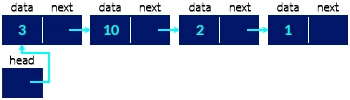
What is a Linked List

[/fusion_toggle][fusion_toggle title=”Question 4: What is a Stack?” open=”no” class=”” id=””]

Answer:

  • A stack refers to a linear data structure performing operations in a LIFO (Last In First Out) order.
  • In a stack, elements can only be accessed, starting from the topmost to the bottom element.

[/fusion_toggle][fusion_toggle title=”Question 5: What is LIFO?” open=”no” class=”” id=””]

Answer:

  • LIFO is an abbreviation for Last In First Out
  • It is a way of accessing, storing and retrieving data.
  • It extracts the data that was stored last first.

[/fusion_toggle][fusion_toggle title=”Question 6: What is FIFO?” open=”no” class=”” id=””]

Answer:

  • FIFO stands for First In First Out.
  • It is a way of accessing, storing and retrieving data.
  • The data that was stored first is extracted first.

What is FIFO

[/fusion_toggle][fusion_toggle title=”Question 7: What is a Queue?” open=”no” class=”” id=””]

Answer:

  • A queue refers to a linear data structure that performs operations in a FIFO order.
  • In a queue, the least recently added elements are removed first as opposed to a stack.
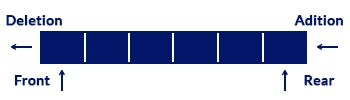
What is a Queue

[/fusion_toggle][fusion_toggle title=”Question 8: What are Binary Trees?” open=”no” class=”” id=””]

Answer:

  • A binary tree is an extension of the linked list structure where each node has at most two children.
  • A binary tree has two nodes at all times, a left node and a right node.

What are Binary Trees

[/fusion_toggle][fusion_toggle title=”Question 9: What is Recursion?” open=”no” class=”” id=””]

Answer:

  • Recursion refers to a function calling itself based on a terminating condition.
  • It uses LIFO and therefore makes use of the stack data structure.

[/fusion_toggle][fusion_toggle title=”Question 10: What is the OOPs concept?” open=”no” class=”” id=””]

Answer:

OOPs stands for Object-Oriented Programming System, a paradigm that provides concepts such as objects, classes, and inheritance.

[/fusion_toggle][fusion_toggle title=”Question 11: What are the concepts introduced in OOPs?” open=”no” class=”” id=””]

Answer:

Following are the concepts introduced in OOPs:

 Object – A real-world entity having a particular state and behavior. We can define it as an instance of a class.

Class – A logical entity that defines the blueprint from which an object can be created or instantiated.

Inheritance – A concept that refers to an object gaining all the properties and behaviors of a parent object. It provides code reusability.

Polymorphism – A concept that allows a task to be performed in different ways. In Java, we use method overloading and method overriding to achieve polymorphism.

Abstraction – A concept that hides the internal details of an application and only shows the functionality. In Java, we use abstract class and interface to achieve abstraction.

Encapsulation – A concept that refers to the wrapping of code and data together into a single unit.

[/fusion_toggle][fusion_toggle title=”Question 12: Explain what a Binary Search Tree?” open=”no” class=”” id=””]

Answer:

  • A binary search tree is used to store data in a manner that it can be retrieved very efficiently.
  • The left sub-tree contains nodes whose keys are less than the node’s key value.
  • The right sub-tree contains nodes whose keys are greater than or equal to the node’s key value.
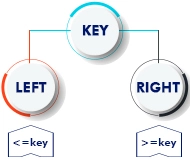
Explain what a Binary Search Tree

[/fusion_toggle][fusion_toggle title=”Question 13: Explain Doubly Linked Lists?” open=”no” class=”” id=””]

Answer:

  • Doubly linked lists are categorized as a special type of linked list in which traversal across the data elements can be done in both directions.
  • This is made possible by the presence of two links in every node, one that links to the node next to it and another that connects to the node before it.
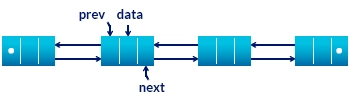
Explain Doubly Linked Lists

[/fusion_toggle][fusion_toggle title=”Question 14: What is a Graph?” open=”no” class=”” id=””]

Answer:

  • A graph is a particular type of data structure that contains a set of ordered pairs.
  • The ordered pairs in a graph are also known as edges or arcs and are most commonly used to connect nodes where the data can be stored and retrieved.

[/fusion_toggle][fusion_toggle title=”Question 15: Differentiate between linear and non-linear data structure?” open=”no” class=”” id=””]

Answer:

  • In linear structure, data elements are adjacent to each other. In non-linear data structure, element can connect to over two adjacent data elements.
  • Examples of linear data structure include linked lists, arrays, queues, and stacks. Examples of non-linear data structure include graphs and trees.

[/fusion_toggle][fusion_toggle title=”Question 16: What is a Deque?” open=”no” class=”” id=””]

Answer:

  • A deque is a double-ended queue.
  • This is a structure in which elements can be inserted or removed from either end.

[/fusion_toggle][fusion_toggle title=”Question 17: What’s the difference between Stack and Array?” open=”no” class=”” id=””]

Answer:

Stack follows a Last In First Out (LIFO) pattern. What this means is that data access necessarily follows a particular sequence where the last data to be stored is the first one that will be extracted. On the other hand, Arrays do not follow a specific order, but instead can be accessed or called by referring to the indexed element within the array.

[/fusion_toggle][fusion_toggle title=”Question 18: How does variable declaration affect memory?” open=”no” class=”” id=””]

Answer:

  • The amount of memory that is to be reserved or allocated depends on the data type being stored in that variable.
  • For example, if a variable is declared to be “integer type”, 32 bits of memory storage will then be reserved for that particular variable.

[/fusion_toggle][fusion_toggle title=”Question 19: What are dynamic data structures?” open=”no” class=”” id=””]

Answer:

Dynamic data structures have the feature where they expand and contract as a program runs. It provides a very flexible method of data manipulation because adjusts based on the size of the data to be manipulated.

[/fusion_toggle][fusion_toggle title=”Question 20: How to get the matching characters in a string?” open=”no” class=”” id=””]

Answer:

To get the matching characters in a string, the below steps are followed:

  •  Hash Map data structure is taken which works with the key-value pair.
  • Loop the strings, character by character, and verify if that character of the string exists in the hash map or not.
  • If the result is true, the counter for the character in the hash map is increased or else then put a count as 1.
  • Once the loop ends, then the Hash map is traversed and print the characters with more than 1 count.

[/fusion_toggle][/fusion_accordion][/fusion_builder_column][/fusion_builder_row][/fusion_builder_container]

Share the Post:

Related Posts

Contact Us