



If you’re searching for a Job oriented coding Bootcamp in Atlanta, Georgia, you’re probably not looking for “another course.” You’re looking for outcomes: the right tech stack, real project work, strong interview prep, and a path to interviews and offers. Atlanta’s tech market is active across fintech, logistics, healthcare, telecom, and enterprise IT—but the bar for entry-level roles has risen. That’s why the best Java Bootcamp in Atlanta, Georgia is the program that teaches Java in-depth, adds modern DevOps + cloud skills, and supports you until you’re hired—not one that simply trains and leaves you to fend for yourself.
SynergisticIT JOPP is exactly that: the Best Java training with job placement in Atlanta, Georgia because it’s not “just a bootcamp.” It’s a combined model (training + staffing-style placement support) called a Job Placement Program (JOPP), and it can be done remotely—making it a strong fit as an Online best coding Bootcamp in Atlanta, Georgia while still focusing on getting hired.
Atlanta has a rapidly expanding technology ecosystem, and major corporations across finance, airlines, logistics, healthcare, media, and enterprise software continue to hire full‑time Java developers. Companies that actively employ or have historically employed Java talent in the region include The Home Depot, Delta Air Lines, Cox Enterprises, Cox Automotive, AT&T, NCR Voyix, Equifax, UPS, Norfolk Southern, State Farm, Anthem/Blue Cross Blue Shield, Fiserv, Global Payments, Honeywell, Salesforce, Accenture, IBM, JPMorgan Chase, Wells Fargo, Bank of America, BlackRock, Warner Bros. Discovery, Georgia‑Pacific, Southern Company, and Invesco. Java developers in Atlanta earn competitive salaries, with junior roles at $75,000–$90,000, mid‑level positions at $95,000–$120,000, and senior developers earning $125,000–$150,000. Advanced roles reach $155,000–$175,000, architect positions exceed $180,000–$210,000, and engineering leadership often surpasses $200,000–$260,000 in total compensation.
Java must be learned in-depth (not “quick Java”) to get hired
Here’s the hard truth: employers don’t hire for “completed a course.” They hire for capability.
“In-depth Java” means you can:
- use Core Java confidently (collections, OOP, concurrency, JVM basics),
- build real Spring Boot services (REST APIs, security/auth, microservices patterns),
- work with databases properly (SQL + ORM),
- write and maintain tests,
- understand deployments and CI/CD basics.
This is exactly where most bootcamps fail: they teach enough to follow a tutorial, but not enough to build and support real systems.
Why SynergisticIT’s JOPP is superior to bootcamps
Most bootcamps follow a “train and release” model: finish the course, get a certificate, then you’re told to apply everywhere. That’s why many graduates struggle to get hired—because the market demands deeper skills, stronger projects, and a repeatable interview strategy.
SynergisticIT’s JOPP is structured around the missing pieces:
- deeper, job-relevant upskilling,
- real project work,
- repeated interview preparation,
- active employer connection support.
SynergisticIT also does direct marketing of candidates to a large network and active placement support (including preparation and interview connection), which is fundamentally different from generic “career advice” and passive placement support which most bootcamps do.
Pay model that aligns with outcomes
SynergisticIT takes partial fees upfront and the balance only after helping the candidate secure an offer at $81k or higher.
- SynergisticIT’s Job Placement Program (JOPP)
- SynergisticIT’s Java DevOps Full Stack Job Placement Program
This structure is why many people describe SynergisticIT as the Best Java training with job placement in Atlanta, Georgia and also a coding Bootcamp with job assistance in Atlanta, Georgia—because support continues until hiring outcomes, not just until the last class.
30% of candidates tried other bootcamps first (and still didn’t succeed)
A meaningful share of JOPP candidates (around 30%) already tried other bootcamps or courses (Udemy/Coursera/university bootcamps) and did not succeed—then joined JOPP and finally gained traction.
This is why “cheap tuition” can be expensive in real life: you can spend months (or years) cycling through training that produces no interviews. Even if JOPP costs more, it can save time + money by reducing bootcamp-hopping and shortening time-to-offer.
Java was created at Sun Microsystems by a team led by James Gosling. The project traces back to the early 1990s (“Green Project”), and Java was publicly released in May 1995—meaning Java has been powering software for 30+ years.
Why Java is important to learn for employment in Atlanta, Georgia
Java remains one of the most stable and employable choices because it’s widely used where reliability, security, and scalability are non-negotiable:
- Enterprise backend development (APIs, microservices, integrations, platforms)
- Financial services (payments, risk, compliance, fraud systems)
- Large-scale business systems (retail operations, telecom platforms, logistics services)
Why Atlanta is a strong place to learn Java: the metro area blends headquarters-scale enterprises with fast-moving product teams. That creates steady demand for back-end engineering, cloud migration, integrations, and platform reliability—areas where Java and Spring are common. Atlanta also has large, direct employers across airlines and logistics, retail and consumer, media, and financial services (think companies like Delta Air Lines, The Home Depot, UPS, The Coca-Cola Company, Cox Enterprises, NCR Voyix, and Equifax). Even when roles are labeled “cloud” or “platform,” the core services often run on Java microservices, APIs, and data integrations. So focusing on Java in Atlanta is not betting on a niche—it’s building a durable foundation that matches enterprise hiring.
Industries using Java and why it’s future-proof
Java is “future-proof” because it is deeply embedded in industries that don’t rewrite everything every year:
- Fintech & banking (regulated workflows, secure services)
- Logistics & supply chain (routing, pricing, integrations)
- Healthcare (secure data exchange, claims, identity)
- Telecom & enterprise SaaS (billing, provisioning, platform services)
These sectors value Java’s mature ecosystem: testing culture, security libraries, observability tooling, and long-term maintainability.
Why Java will be in demand even with AI tools
AI can generate code faster—but it does not replace engineering judgment: architecture choices, security hardening, performance tuning, testing strategy, production debugging, and reliability ownership.
In fact, AI increases the need for strong engineers who can:
- validate AI-generated code,
- enforce quality and security,
- deploy to cloud environments,
- monitor systems and resolve incidents.
That’s why Java + Spring + DevOps/cloud remains a high-confidence employment path compared to stacks that rise and fall on hype.
Plenty of job opportunities: Java programming is the most sought-after skill. A quick search on LinkedIn reveals a whopping 737,000+ job openings for Java Developers in the U.S. Thus, knowing your way around Java may reward you with unlimited jobs.
Higher Income Potential: The average salary of a Java Developer is $102,430 per annum, which is considerably higher than other programming developers. Besides, one can get lucrative job offers ranging from $70,000 to $132,000 per annum based on experience, domain, and location. So, consider taking immersive Java training in Atlanta to acquire the essential skills and get a chance to improve your earnings.

Contribute to Real-World: Java regulates the development of many real-world applications such as gaming consoles, embedded systems, health monitoring devices, navigation systems, laptops, TV sets, mobile phones, etc. As Java has a far-reaching effect on our lives, it will not become obsolete anytime soon. Learning such a robust programming language like Java will enable you to make innovative changes.
Many grads ask: how to get hired as a recent cs graduate when every role wants experience.
A practical, employer-aligned path looks like this:
- Pick an enterprise track (Java + Spring + cloud basics is strong).
- Build 2–3 serious projects (auth, APIs, DB, tests, deployment, documentation).
- Practice interviews weekly (Core Java, Spring, SQL, behavioral).
- Apply with strategy (target roles, tailor resumes, iterate fast).
SynergisticIT’s JOPP emphasizes tech skills + project work + interview prep + ongoing placement support—built for candidates who need their first real break. SynergisticIT JOPP’s almost 70%+ are first-time tech Job Holders, with others being career changers or candidates with gaps.
If you’re aiming high, how to get hired in FAANG is a process:
- consistent data structures & algorithms practice,
- strong fundamentals (Java + problem solving),
- clean projects and code quality,
- behavioral stories (STAR method),
- networking/referrals once you’re interview-ready.
Even if your first job isn’t FAANG, building to that standard helps you get hired faster in strong enterprise roles and then level up. Synergisticit’s JOPP enables the above.
JOPP is not just a bootcamp—it’s a job placement program with a proven track record of getting candidates hired at top companies.
The Tech Stack: What You’ll Master in JOPP
Backend & Core Java:
- OOP, concurrency, collections, streams, lambdas, memory management, Java 17/21/25 features.
- Spring Boot, Spring MVC, Spring Security, REST APIs, microservices architecture.
- Hibernate, JPA, PL/SQL, database optimization.
DevOps & Cloud:
- Git, Maven, Gradle, Jenkins, Docker, Kubernetes, Terraform, Ansible.
- AWS, Azure, GCP deployment and cloud-native development.
- Monitoring (Prometheus, Grafana), logging (ELK stack), CI/CD pipelines.
Frontend & Full Stack:
- React.js, Angular, Node.js, Express.js, MongoDB, RESTful API and GraphQL development.
- JWT/OAuth2 authentication, real-time apps with Socket.IO.
Data Structures & Algorithms:
- Arrays, linked lists, trees, graphs, sorting/searching, dynamic programming, system design.
Competitive Coding & Interview Prep:
- 200+ coding assessments, mock interviews, behavioral and scenario-based training.
This comprehensive stack ensures you’re prepared for any Java developer, DevOps, or full-stack role in today’s market.
Introduction to Java & Oops
- Inheritance
- Encapsulation
- Polymorphism
- Abstractions
- Interface vs Abstract Classes
- Access Modifiers
- Synchronization vs Concurrency
- Java 8 Features
- foreach
- Stream functions
- Parallel streams
- Default Functions
- Functional Interfaces and Lambda expressions
- Exception Handling
- Error vs Exception
- Types of Exceptions
- Throwable Class
- throw and throws
- try, catch and finally blocks
- try block with resources
- Multi-Threading
- What and Why?
- Executorservice
- Producer Consumer Problem
- Wait vs Sleep
- Yield vs Join
- Inter Thread Communication
- Ways to create Threads
- Runnable vs Callable
- Semaphores
- Object level vs Class level locking
- Synchronized keyword and blocks
- File handling - IO operations
- Design Patterns
- Creational
- Structural
- Behavioural
- Classpath and types
- Heap vs Stack Memory
- String handling
- String
- StringBuffer
- StringBuilder
- Primitive Data Types & Wrapper Classes
- Collection Framework
- Map Interface
- JDBC APIs
- Reflection
Servlet
- Web Application Technologies
- Servlet API
- Hypertext Transfer Protocol
- Web Container Architecture
- Deploying a Web Application
- Configuring & Mapping Servlet Definition
- Servlet Life Cycle
- Request Dispatching
- ServletConfig API
- Working with JDBC in Servlet
- Connection Pooling
- ServletContext API
- Http & Session Management
- Session API
- Using Cookies for Session Management
- Cookie API
- URL Rewriting
- Listeners in Servlet
- Applying Filters
JSP
- JSP Technology
- JSP Page Processing
- JSP Scripting Elements
- JSP Implicit Objects
- Page Directive
- Expression Language
JQuery
- Selectors
- Advance Selectors & Filters
- JQuery Events & Function
- Ajax in JQuery
- JQuery UI & DataTable
Hibernate
- Layer Architecture
- Introduction of Hibernate
- Hibernate Architecture & Configuration
- ORM with Hibernate
- Mapping Strategy
- Hibernate Association
- HQL
- Cache Management
Spring
- Introduction to Spring
- Features of Spring
- Spring Architecture
- Spring IOC Containers
- MVC
- Spring Bean Wiring
- Introduction to Spring Boot
- Spring Boot Annotations
- Spring Boot Form Tags
- Spring Validation
- Handling Static Resources
- SPEL
- Spring Interceptors
- Internationalization
- Hibernate with Spring
- JDBC Template
- JPA Repository
- AOP in Spring
- REST Implementation in Spring
- REST Template
- Working with JSON
- Spring Security
- Spring Security Tags
Microservices
- Running Microservices
- Synchronous and Asynchronous communication
- Rest APIs
- Service Registration and Service Discovery
- Client side load balancing
- Server side load balancing
- Circuit Breaker design pattern
- Microservices design patterns
- Kafka - Few Basics
JavaScript
- Overview of JavaScript
- Functions & Events
- JavaScript Object Model
- Exception Handling in JavaScript
- OOP’s in JavaScript
- Prototype Model in JavaScript
- Validating Forms
- DOM Navigation & Handling
- Event & Event Listeners
- Introduction to JSON
JOPP vs. Other Bootcamps: A Detailed Comparison
Why Most Bootcamps Fail to Deliver
Common pitfalls of other bootcamps:
- Limited Curriculum: Focus on basics, outdated tech, or only frontend/backend.
- Minimal Live Instruction: Reliance on pre-recorded content, little real-time support.
- No Real Job Placement: At best, “job assistance” or resume workshops, not active placement.
- Unrealistic Guarantees: “Money-back” offers with impossible conditions or low salary thresholds.
- Lack of Industry Feedback: Outdated skills, poor employer alignment, and little access to real-world projects.
Result:
Most graduates struggle to land interviews, face repeated rejections, or accept low-paying roles far below their expectations.
Why JOPP Is Superior
SynergisticIT’s JOPP stands out for:
- Depth and Breadth: Covers the full Java DevOps stack, cloud, and system design.
- Live, Immersive Training: 5–7 hours/day, 5–7 months, with direct access to expert trainers.
- Active Job Placement: Resume marketing to 24,000+ clients, interview scheduling, and support until you’re hired.
- Proven Results: 91.5% placement rate, average salaries of $95k–$155k, and alumni at top companies.
- Partial Upfront Fees: Only 30% upfront, with the balance due after securing a job of $81k+.
- Continuous Industry Engagement: Curriculum updated based on feedback from Oracle CloudWorld, JavaOne, Gartner Summit, and direct employer input.
SynergisticIT’s alumni have secured roles at top-tier companies with salaries ranging from $95k to $155k, including:
- Visa, Apple, PayPal, Walmart Labs, AutoZone, Wells Fargo, Capital One, Walgreens, Bank of America, SAP, Cisco Systems, Verizon, T-Mobile, Intuit, Ford, Hitachi, Western Union, Deloitte, Dell, USAA, Carfax, Humana.
These are not contract or temp roles—JOPP graduates land full-time, career-track positions.
Placement Outcomes and ROI
- 91.5% placement rate—the highest in the industry.
- Average time to hire: 6–12 weeks after program completion.
- 90% of hires had no prior tech job experience; 10% were career changers or had gaps.
- 30% of JOPP candidates previously attended other bootcamps or online courses without success.
- Highest ROI compared to colleges and other bootcamps—graduates recoup their investment within months and earn significantly more over their careers.
See the ROI blog for a detailed comparison.
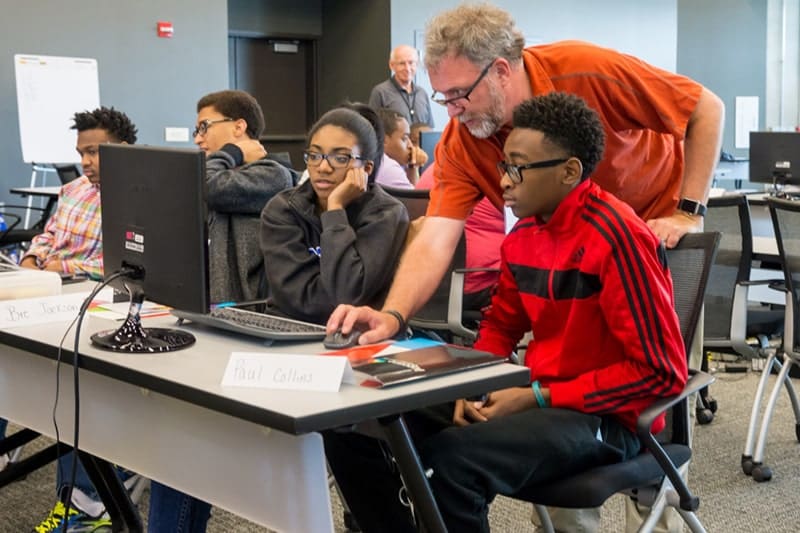
Why Recent CS Graduates Should Join JOPP: “How to Get Hired as a Recent CS Graduate”
The Challenge for New Grads
Despite earning a computer science degree, many recent graduates struggle to land their first tech job. The reasons include:
- Lack of practical, job-ready skills: College curricula often lag behind industry needs.
- No real-world project experience: Employers want candidates who can deliver from day one.
- Poor interview preparation: Technical and behavioral interview skills are rarely taught in academia.
- ATS and resume pitfalls: Many grads fail to optimize their resumes for applicant tracking systems.
In today’s market, knowing “how to get hired as a recent CS graduate” means bridging the gap between theory and practice.
How JOPP Bridges the Gap
- Hands-On Projects: Build and deploy enterprise-grade applications.
- Interview Mastery: 200+ coding assessments, mock interviews, and scenario-based training.
- Resume Optimization: ATS-compliant branding, LinkedIn, and GitHub guidance.
- Direct Employer Access: Active marketing to 24,000+ tech clients.
- Job Placement Support: From application to offer, with ongoing mentorship.
Result:
Recent CS grads who join JOPP are hired faster, earn higher salaries, and launch their careers with confidence.
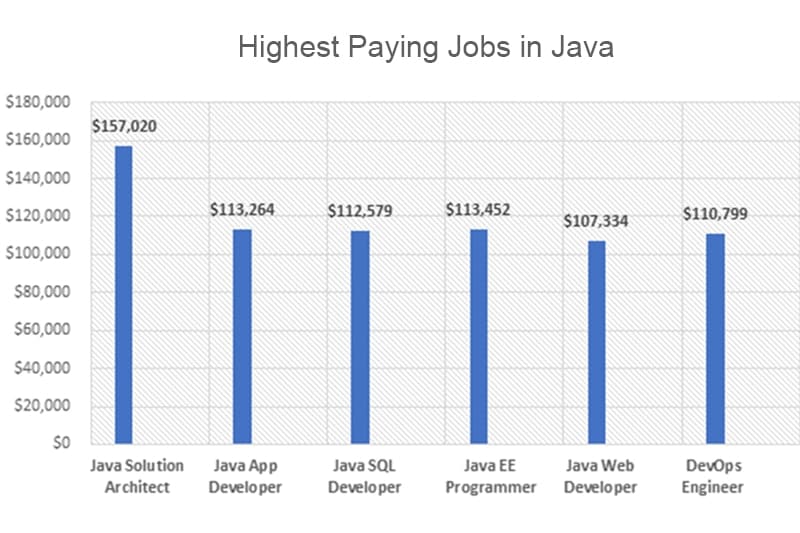
Career Options after Java Training at SynergisticIT
There are a splendid number of job options you can consider after taking our Java training in Atlanta, such as:
- Java Solution Architect ($157,020)
- Ui Developer (107,250)
- DevOps Engineer ($110,799)
- Java SQL Developer ($112,579)
- Java Web Developer (107,334)
- Scrum Master ($97,872)
- Project Manager ($85,052)
Online Availability: Serving Atlanta and Beyond
SynergisticIT’s JOPP is fully online and accessible to candidates across Atlanta, Georgia, and the entire USA. Live, instructor-led sessions, small batches, and personalized support ensure a high-quality experience regardless of location.
The Only Bootcamp in Atlanta That Ensures Job Placement
While Atlanta boasts several coding bootcamps and online courses, SynergisticIT’s Java DevOps Full Stack Job Placement Program (JOPP) is the only one that guarantees job placement with top-tier employers at industry-leading salaries. Its unique blend of in-depth training, active job placement, and performance-based fees delivers the highest ROI for tech jobseekers—whether you’re a recent CS graduate, a career changer, or aiming for FAANG.
Ready to launch your tech career?
Explore SynergisticIT’s Job Placement Program JOPP and Java DevOps Full Stack JOPP, or contact SynergisticIT to get started.
Start Your Tech Career Journey Today
Don’t settle for training that ends with a certificate. Choose a program that delivers real results, lifelong skills, and a direct path to your dream job. Join SynergisticIT’s Best Java Coding Training Bootcamp in Atlanta, Georgia, and secure your future in tech.
- Learn more about JOPP
- Explore the Java DevOps Full Stack JOPP
- Watch event videos and tech talks
- More Videos
- Contact SynergisticIT to get started
Your tech career starts with one bold step. Let SynergisticIT walk the rest with you.
Frequently Asked Questions on Java Training
- Java is easier to learn. It was designed to be easy to use; hence one can write, compile, debug and learn the programming language.
- It is an object-oriented language; it allows you to create modular programs and reusable code.
- Java is platform-independent, one of the most significant advantages of the language as it can move quickly from one system to another. For World Wide Web software, the ability to run the same program on different systems and Java aces at it by being platform-independent both at the source ad binary levels.
- The robustness, ease of use, security features, and cross-platform capabilities make Java a language of choice for providing worldwide Internet solutions.
- An updated curriculum that is designed and upgraded regularly as per industry demand.
- Access to a vast resource bank and unlock 1000 plus study material in our up-to-date library.
- The assistance of industry-experienced mentors throughout every step of your course.
- Continuous evaluation measures to ensure you gain complete course knowledge.
- Build scalable and highly portable Java applications.
- Job search assistance and portfolio assistance.
- Technical Knowledge and Confidence to crack any interview.
- Access to leading companies and high-paying jobs.
- Learn Javaand improve your coding skills.
- Practice Algorithm And Data Structures
- Participate In Programming Sessions
- Discuss issues faced with mentors
- Diversify your knowledge
- Build Projects
- Gain a Java Certification to have a final stamp of approval!
- It’s the best choice for creating streaming applications due to the reaction function.
- Java is used widely in Web, Mobile development, Big Data, Internet of Things, Blockchain, and Artificial Intelligence. This enables Serverless and FaaS (Function as a service) applications with robust functionality.
- Java continuously keeps pace with progress and updates its versions faster.
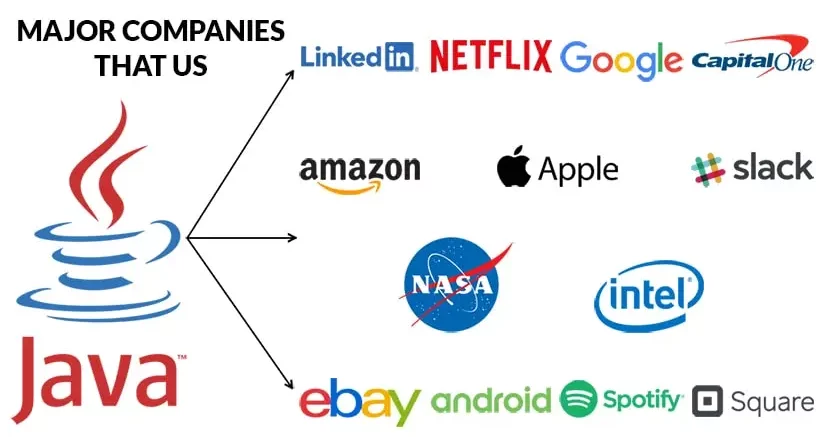
- If you are a programming enthusiast, you must have observed Airbnb, Uber, Netflix, and various other tech giants have used Java in their development processes. So yes, there is a long future ahead for Java.
- Java Standard Edition or Java SE offers core functionality of the programming language and is called Core Java. It defines everything from basic types and objects of the Java Programming language to high-level classes used for networking, security, database access, graphical user interface (GUI) development, and XML parsing. Additionally to the core API, the Java SE platform comprises a virtual machine, development tools, deployment technologies, and other class libraries and toolkits commonly used in Java technology applications.
- Java EE or Enterprise Edition is built on the Java SE platform. It offers an API and runtime environment for constructing and running large-scale, multi-tiered, scalable, reliable, and secure network applications.
Testimonials
A great company to further your career and grow as a developer. The management is amazing and you will have an opportunity to get certified in many ways. If you are on OPT, this is a great chance for you to learn about new technologies and gain valuable experience.
...Great place for coders. If you wish to break the tough walls of technical interviews of Tech firms like Google Apple eBay this is the place to be. This is Java with whipped cream with stawberries vanilla iced hot and everything under the sun. They advertise themselves as best place to learn Java but that’s […]
...Good place for anyone struggling to find a technology job with bigger name clients. I worked with them for some time like a year back or so and after my experience with them I had upgraded my coding skills to the standards of major it organizations. Synergisticit is in my opinion one of the very […]
...Synergistic IT was the best decision I made for my career. During my time here, I worked on multiple projects and learned a lot of high demand skills for the competitive tech industry. They have amazing trainers who have lots of experience. I would recommend it to anyone who wants to become a professional in […]
...Find Java Certificate Training Course in other Cities
- Java Training in New York City
- Java Training in Los Angeles
- Java Training in Chicago
- Java Training in Houston
- Java Training in Phoenix
- Java Training in Philadelphia
- Java Training in San Antonio
- Java Training in San Diego
- Java Training in Dallas
- Java Training in Austin
- Java Training in Richmond
- Java Training in Virginia Beach
- Java Training in San Jose
- Java Training in Fort Worth
- Java Training in Jacksonville
- Java Training in Columbus
- Java Training in Charlotte
- Java Training in Indianapolis
- Java Training in San Francisco
- Java Training in Seattle
- Java Training in Denver
- Java Training in Washington
- Java Training in Minneapolis
- Java Training in Tampa
- Java Training in Boston
- Java Training in El Paso
- Java Training in Nashville
- Java Training in Oklahoma
- Java Training in Las Vegas
- Java Training in Detroit
- Java Training in Portland
- Java Training in Memphis
- Java Training in Louisville
- Java Training in Milwaukee
- Java Training in Miami
- Java Training in Chandler
- Java Training in Baltimore
- Java Training in Albuquerque
- Java Training in Tucson
- Java Training in Mesa
- Java Training in Sacramento
- Java Training in Fresno
- Java Training in Atlanta
- Java Training in Kansas City
- Java Training in Colorado Springs
- Java Training in Raleigh
- Java Training in St. Louis
- Java Training in Spokane